Senior Horse Strong
Thursday, October 8, 2026
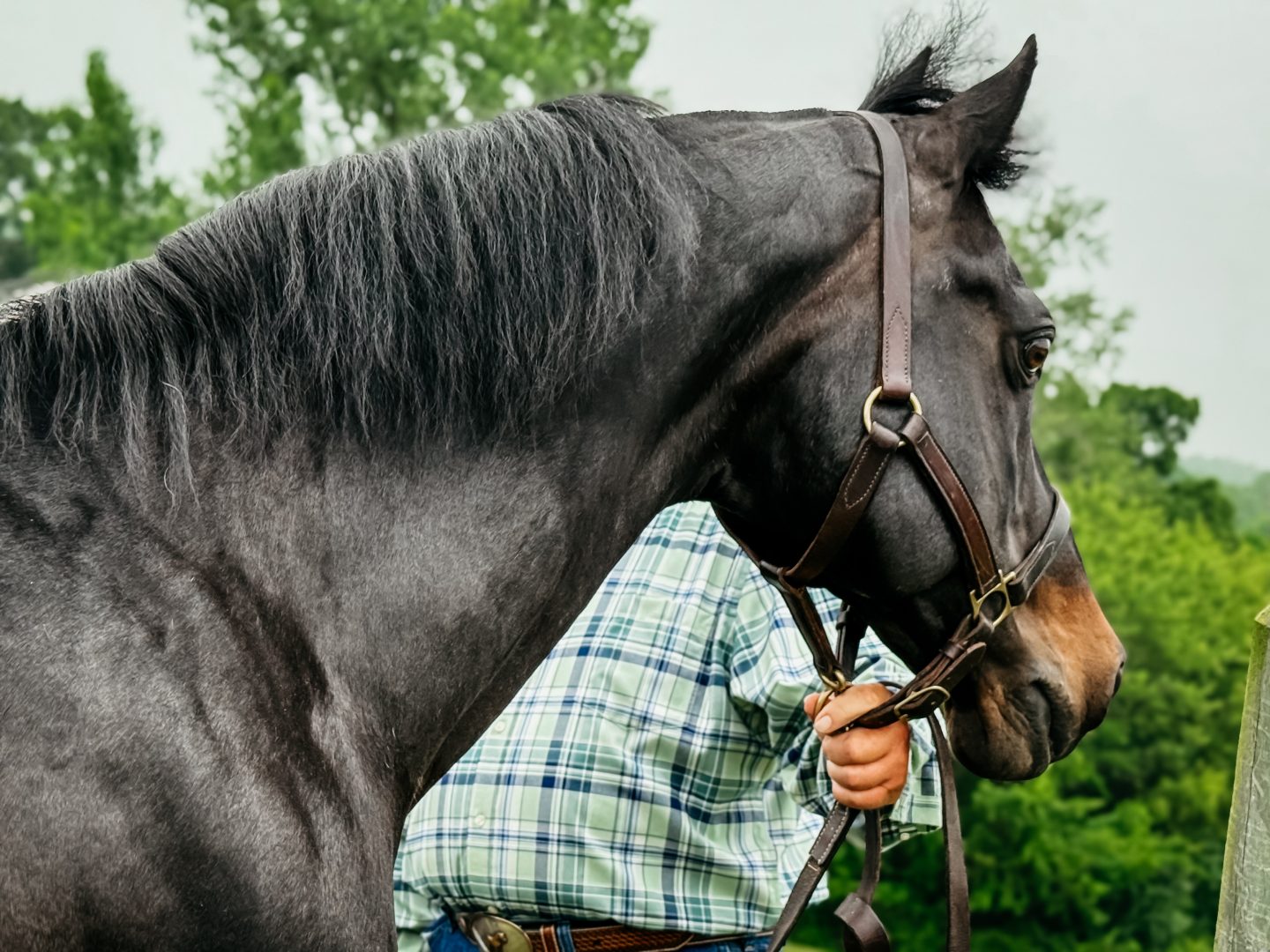
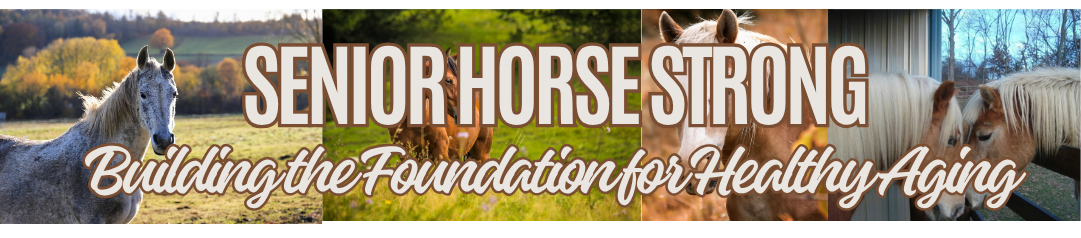
Aging is a natural part of every horse’s life, but getting older does not mean a horse should automatically lose condition, mobility, or vitality. With thoughtful management and a nutrition program that evolves with them, senior horses can continue to thrive well into their later years.
As horses age, their needs may begin to shift. Teeth wear down, digestion can become less efficient, activity levels may change, and maintaining body condition can become more challenging. Some horses lose weight more easily, while others may begin to gain weight or develop changes in fat distribution as metabolism changes.
Senior horse nutrition should never be based on age alone. It should be based on the horse in front of you.
Keep Forage at the Center
Forage should remain the foundation of the senior horse’s diet whenever possible. Quality forage provides fiber, supports digestive health, and helps maintain body condition.
As dental health changes, however, long-stem hay may become more difficult to chew. Watch for quidding, slow eating, dropped feed, or long forage particles in the manure.
If chewing becomes challenging, soaked hay cubes, chopped forage, or another appropriate forage replacement may need to become part of the feeding program.
Regular dental care is an important piece of senior nutrition. Even a well-designed ration cannot provide its full benefit if the horse cannot comfortably chew and consume it.
The key is to focus on the foundation.
Consider Smaller, More Frequent Meals
As horses age, feeding management can become just as important as what is in the feed.
Dividing the daily ration into several smaller meals may be beneficial, particularly for horses requiring additional calories. Smaller feedings can be easier to manage and more closely complement the horse’s naturally forage-driven digestive system.
If your senior horse is losing condition, simply adding more grain is not always the best first step.
Before increasing the scoop, evaluate the entire diet. Additional calories may be better provided through increased fat or highly digestible fiber sources rather than relying heavily on larger grain meals.
Use a Weight Tape as Your Report Card
A simple weight tape can be one of the most valuable tools in a senior horse management program.
Take measurements regularly and record them. The exact number is less important than the trend.
Gradual weight loss can indicate that it is time to reevaluate forage intake, calorie intake, dental health, feeding frequency, or overall health.
Weight gain deserves attention too. Metabolic changes can occur as horses age, and some horses may begin gaining weight more easily or developing noticeable fat deposits.
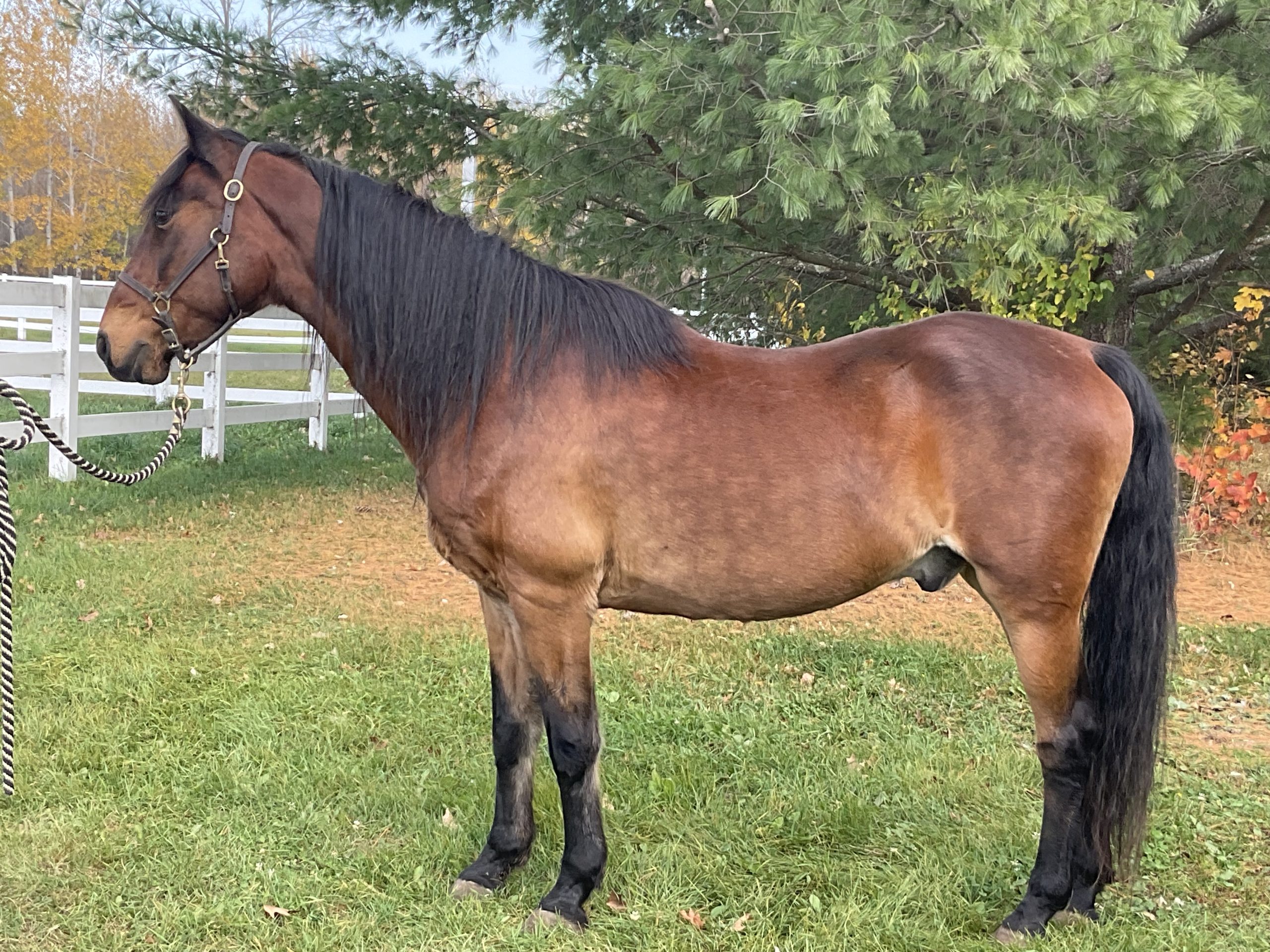
Pair weight measurements with a monthly photograph taken from the same angle. Pictures can reveal changes in:
- Topline and muscle tone
- Rib coverage
- Neck crest and fat pads
- Belly shape
- Hair coat quality
- Overall condition
Sometimes a photograph tells you what a number cannot.
Nutrition Is More Than Calories
Senior horses still need a balanced supply of vitamins and trace minerals to support immune function, tissue health, hoof quality, skin and coat condition, and normal metabolic processes.
Nutrient quality and availability matter too.
Highly bioavailable trace minerals, such as those provided through Zinpro® ProPath® Performance Minerals®, are designed to support efficient mineral utilization. For an aging horse, providing nutrients in forms the body can effectively use can be an important part of a well-balanced feeding program.
Joint comfort also deserves attention. Maintaining comfortable movement supports grazing, activity, muscle condition, and everyday quality of life.
Ingredients such as glucosamine, chondroitin, and yucca are commonly used to provide additional joint and mobility support in aging horses.
Build the Foundation BEFORE There is a Problem.
Watch the Digestive System
Changes in manure can provide valuable clues about digestive health. A probiotic like Daily Start Probiotic, is highly recommended for supporting absorption of nutrients and ensuring digestive health and proactive immune system.
Fecal water syndrome, changes in consistency, or recurring digestive upset should prompt a closer look at forage, feeding management, stress, water intake, and overall gut health.
Persistent digestive changes should always be discussed with your veterinarian.
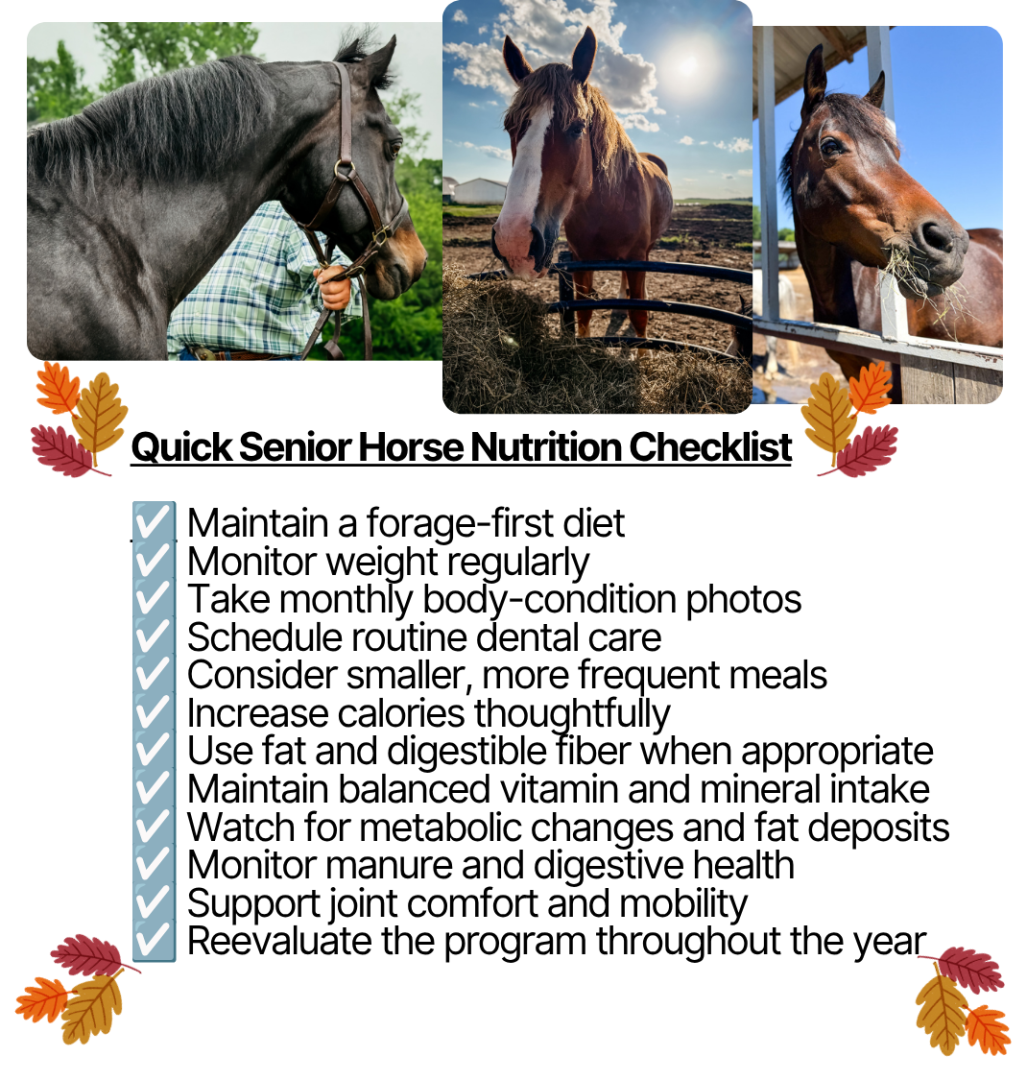
Healthy aging starts with a strong nutritional foundation.